
Keep permissions attached to enterprise knowledge
Design access checks, source updates, and deletion paths as part of the retrieval system.
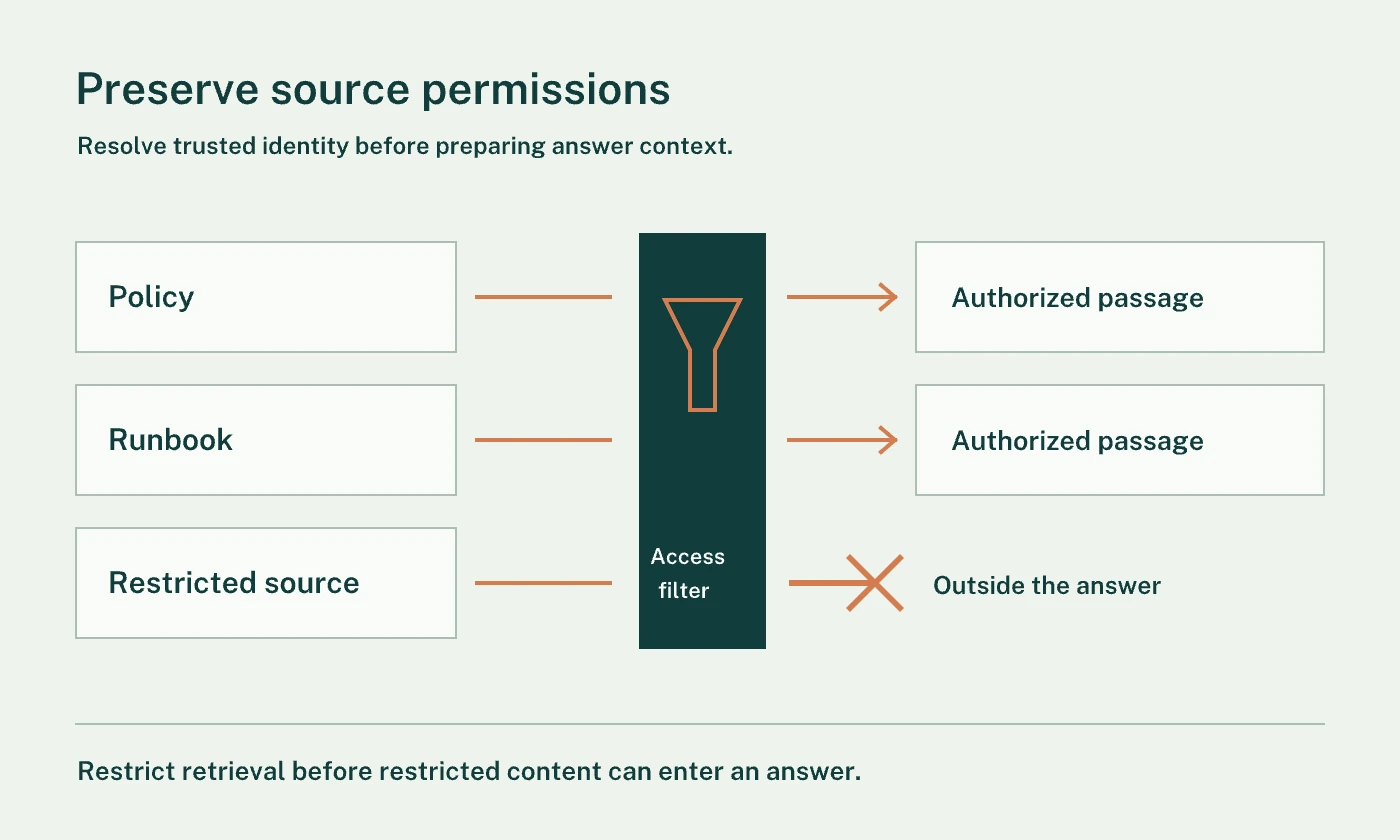
Putting documents in a shared search index does not make them equally available to everyone. An internal knowledge assistant must preserve the access boundaries that apply to its source material, including when content is copied, divided into passages, refreshed, or removed.
Treat permission handling as a retrieval requirement from the beginning. Retrofitting it after a successful answer demonstration can force changes to the index, identity model, caching behavior, and evaluation process at the same time.
Identify the authority for access
List the systems that own user identity, group membership, and document permissions. Determine how the application obtains a trusted user context and how that context is mapped to each source collection. Avoid accepting a user-supplied group name as evidence of membership.
Decide how external collaborators, service accounts, and users with several roles are represented. Where access models differ across repositories, document the translation rather than assuming the same group name carries the same meaning everywhere.
Filter before building the answer context
The material supplied to answer generation should already satisfy the intended access rules. Hiding a source link after the response has been generated does not remove the information that source contributed to the answer.
Microsoft’s security filter pattern describes filtering search results using principal identifiers. It also makes an important distinction: a filter string is not itself authentication or authorization. The surrounding application must establish a trustworthy identity and apply the correct policy.
Carry access metadata through document preparation. When a document is divided into passages, each passage still needs the source identity and access information required to make a retrieval decision.
Design for changes in access
A permission change should be reflected in the retrieval path, not just in the original repository. Define how quickly updates propagate and how the system behaves while its access metadata is stale or unavailable.
Include deletion in this design. Removing a document from a repository should have a defined effect on indexed passages, generated summaries, and caches that may contain its content. Give the content owner a way to confirm that removal has been processed.
Test the boundary with real roles
Build evaluation cases for users who should see an answer, users who should see only part of the evidence, and users who should receive no relevant material. Repeat those checks after changing group membership, source permissions, or document status.
Also inspect indirect disclosure. A title, snippet, suggested follow-up question, or cached response can reveal information even when the full document link is unavailable. Evaluate the entire experience rather than treating the final list of citations as the only output.
Keep an explanation people can use
When access prevents an answer, explain the limit without revealing restricted content. Point users toward the appropriate process for requesting access where one exists. Avoid suggesting that the assistant searched everything when it only searched the user’s authorized collection.
A useful knowledge system combines relevance with a trustworthy boundary. Teams should be able to understand both where an answer came from and why a different user may receive a different result.